Infrared Imaging Phenotyping

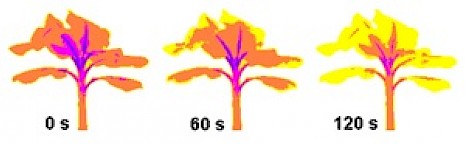
Phenotyping with infrared imaging records images of the sample’s surface heat emission, representing the surface temperature. Thus, temperatures of plant leaves and other organs can be determined and monitored. The information serves to assess plant health, for instance in disease screens or to determine environmental stress effects.

  • Imaging infrared radiation
  • Surface temperatures
  • Stress assessments
  • Disease monitoring

At LemnaTec, we understand that when plants are exposed to (sun-)light, their surfaces can significantly increase in temperature [1]. To monitor this crucial aspect of plant health, we utilize advanced infrared cameras. These sensors are designed to measure the intensity of infrared radiation emitted from the plant’s surface and are calibrated to display the surface temperature. The data collected is then visualized using color-coding, providing an intuitive representation of temperature variations.

Plant heat emission is largely influenced by transpiration. This natural process plays a vital role in cooling down leaf surfaces. When transpiration rates are high, leaves remain cooler. Conversely, lower transpiration rates can lead to an increase in leaf temperature. It is important to note that transpiration itself is dependent on two key factors: water availability and stomatal activity. By monitoring these factors together with surface temperature, one can gain valuable insights into the overall health and well-being of plants.

At LemnaTec, we are committed to providing cutting-edge solutions for plant phenotyping and analysis. Our technology empowers researchers and agricultural professionals to make informed decisions, ultimately contributing to the advancement of plant science, research for sustainable agriculture, and plant quality monitoring.

[1] Jones, H. G. and Rotenberg, E. 2001. Energy, Radiation and Temperature Regulation in Plants. eLS. http://onlinelibrary.wiley.com/doi/10.1038/npg.els.0003199/abstract